
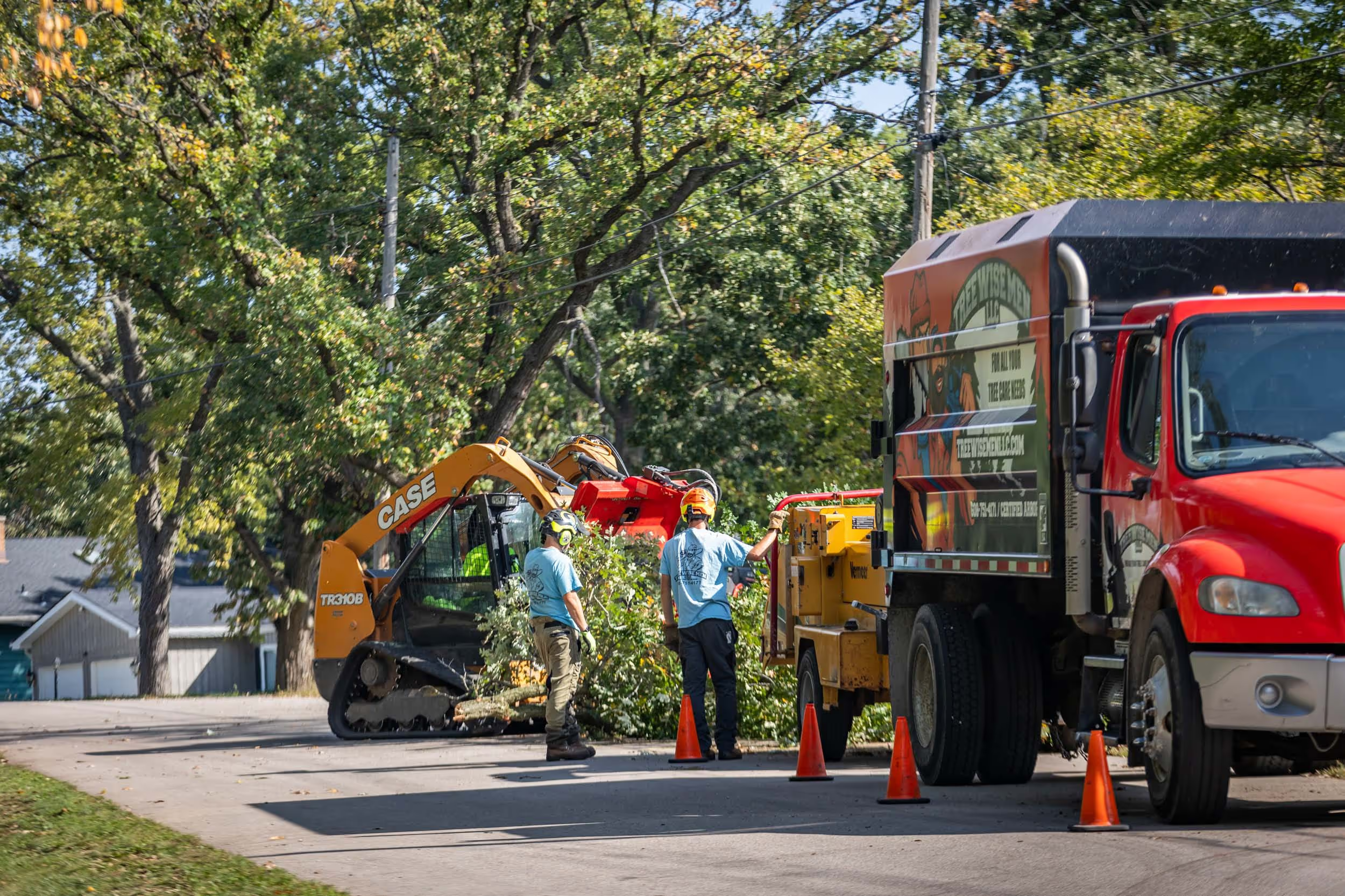
Madison & Dane County Tree Service
Tree service Madison WI is tree care for Madison and Dane County, dispatched from our Madison office at 2909 Landmark Pl, Suite #215B. Estimates are walked by a certified arborist in Madison. Free on-site estimates. Call today.
Each service has its own page: tree removal in Madison, tree trimming and pruning in Madison, ISA Certified Arborist in Madison, 24/7 emergency tree service in Madison, and stump grinding in Madison.
Need an arborist Madison WI can trust for oak wilt, emerald ash borer, or a written risk assessment? See our certified arborist in Madison (ISA WI-1418A). For emergency tree removal in Madison, call (608) 716-4167.
If the tree should stay, tree trimming in Madison covers when to prune, including the Wisconsin DNR oak wilt window, the species common in Dane County, and what a trimming visit includes.
Landmark Pl office: (608) 716-4167. After-hours 24/7 dispatch: (608) 751-4171.
Direct answers
Short answers for the questions Madison homeowners ask first. The ranges are the same ones published on the Wisconsin and Madison cost guides.
How much does tree removal cost in Madison, WI?
In Madison and Dane County, a typical residential removal runs about $600–$2,800. The size bands are $150–$500 under 25 feet, $500–$1,200 from 25 to 50 feet, $1,200–$2,500 from 50 to 75 feet, and $2,500–$5,000+ for a very large tree or a crane job beside a house. Isthmus lots, MGE lines, and City of Madison terrace permits push jobs toward the high end of those bands. Call (608) 716-4167 for a free on-site number.
A leaning tree after a wet spring — should I cable it or remove it?
Cable a tree only when the trunk and roots are still sound and the problem is a weak union overhead. A new lean, soil heaving on the side opposite the lean, or exposed roots after saturated spring soil means the support is failing, and a cable cannot replace those roots — that tree should come down. A long-standing slight lean on a healthy tree is often stable and only needs an assessment. Dane County emergencies are typically on site in 1 to 3 hours; call (608) 716-4167.
What are the warning signs a silver maple is splitting?
Silver maples fail at weak unions, especially co-dominant stems that meet in a tight V with bark trapped in the crotch. A crack at that union, a seam that opens in the wind, or a heavy limb over the roof is the warning, and those are the trees that drop first along the isthmus and the Lake Monona shore. A sound but weak union can be cabled. A cracked or decayed one should be removed.
Professional tree care for Madison properties.
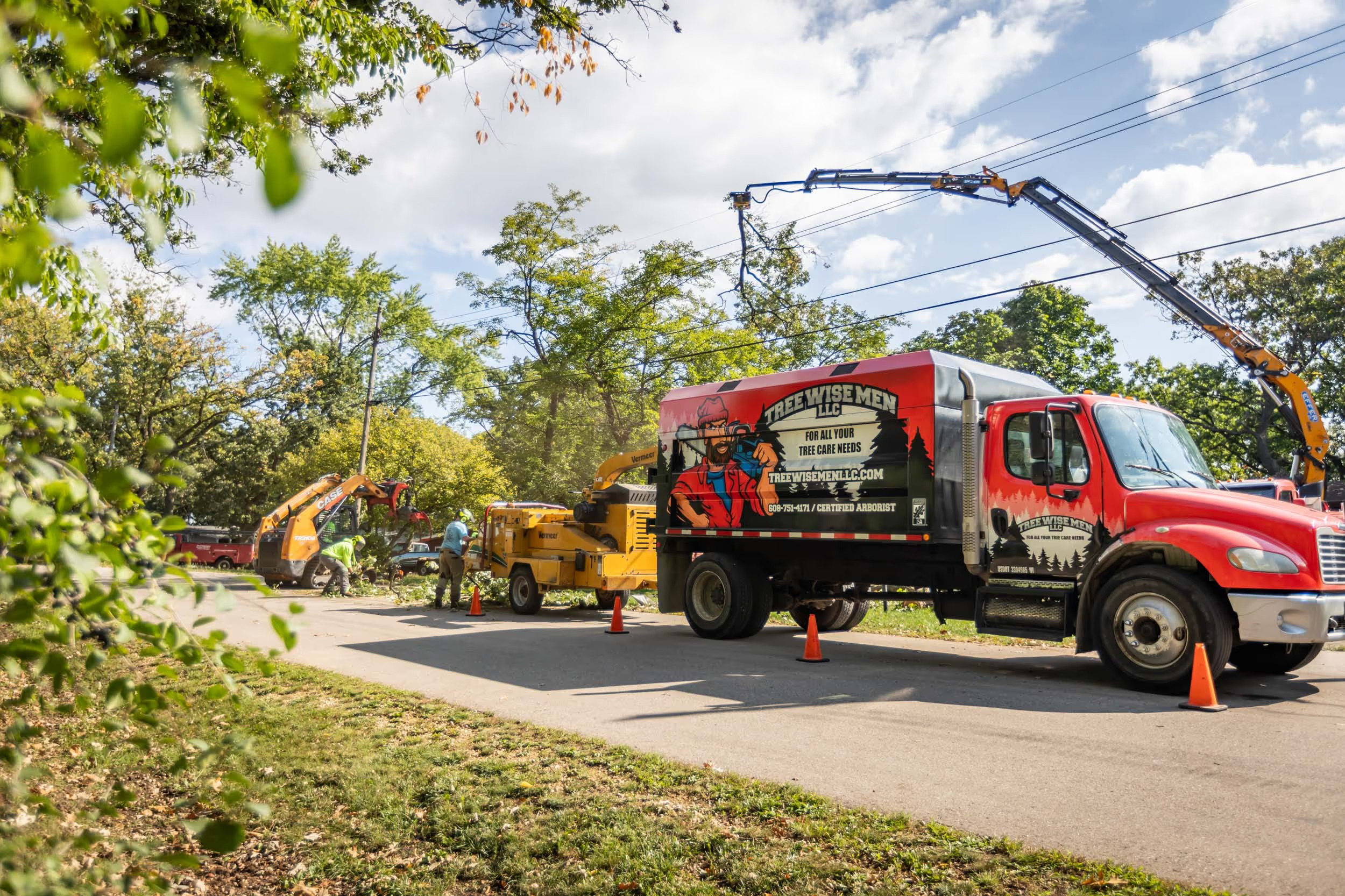
Tree removal in Madison
Isthmus lots and estate oaks. The removal page owns this job.
Learn more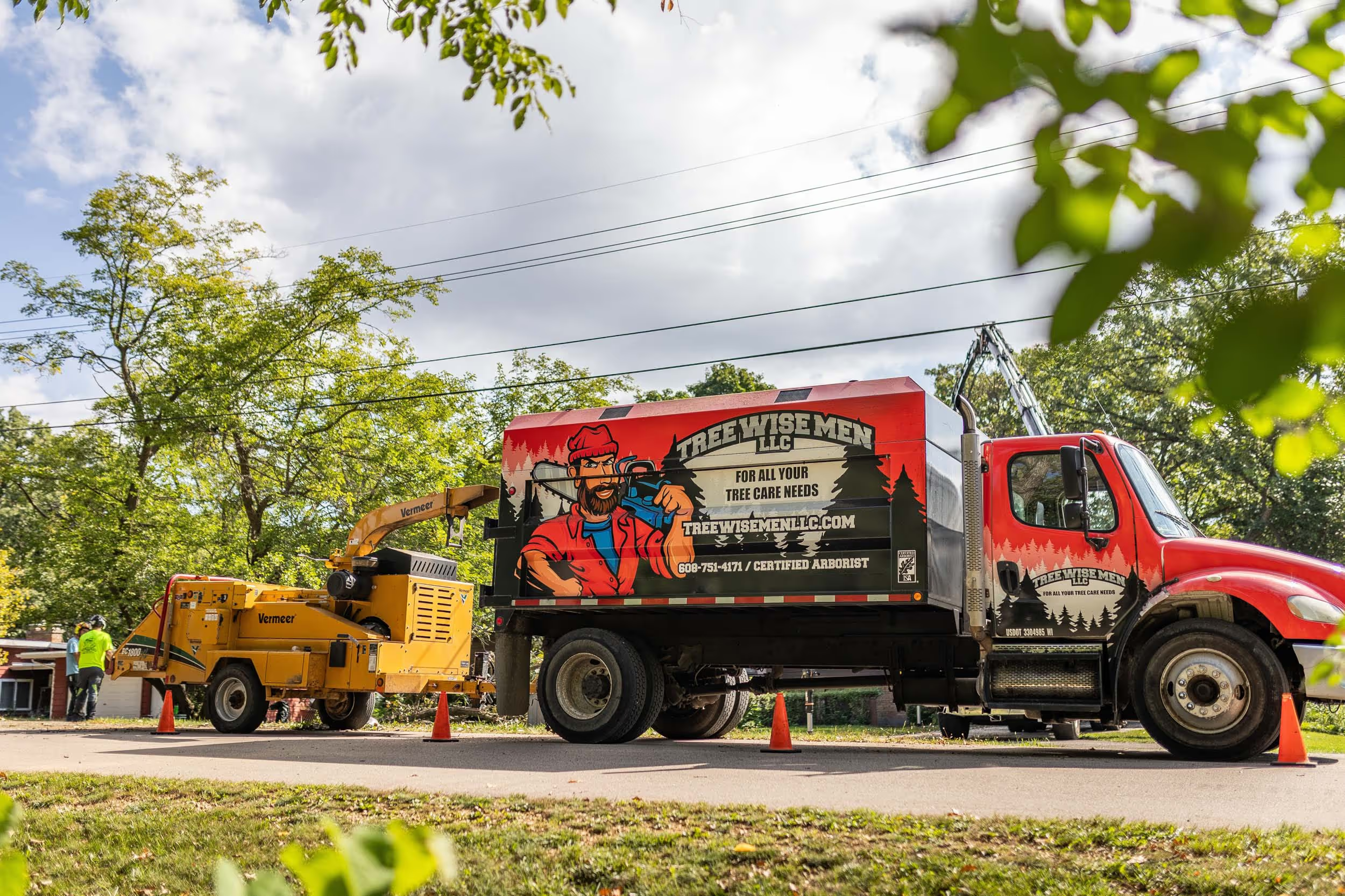
Tree trimming and pruning in Madison
ANSI A300 pruning with oak-wilt-safe timing. Details are on the trimming page.
Learn more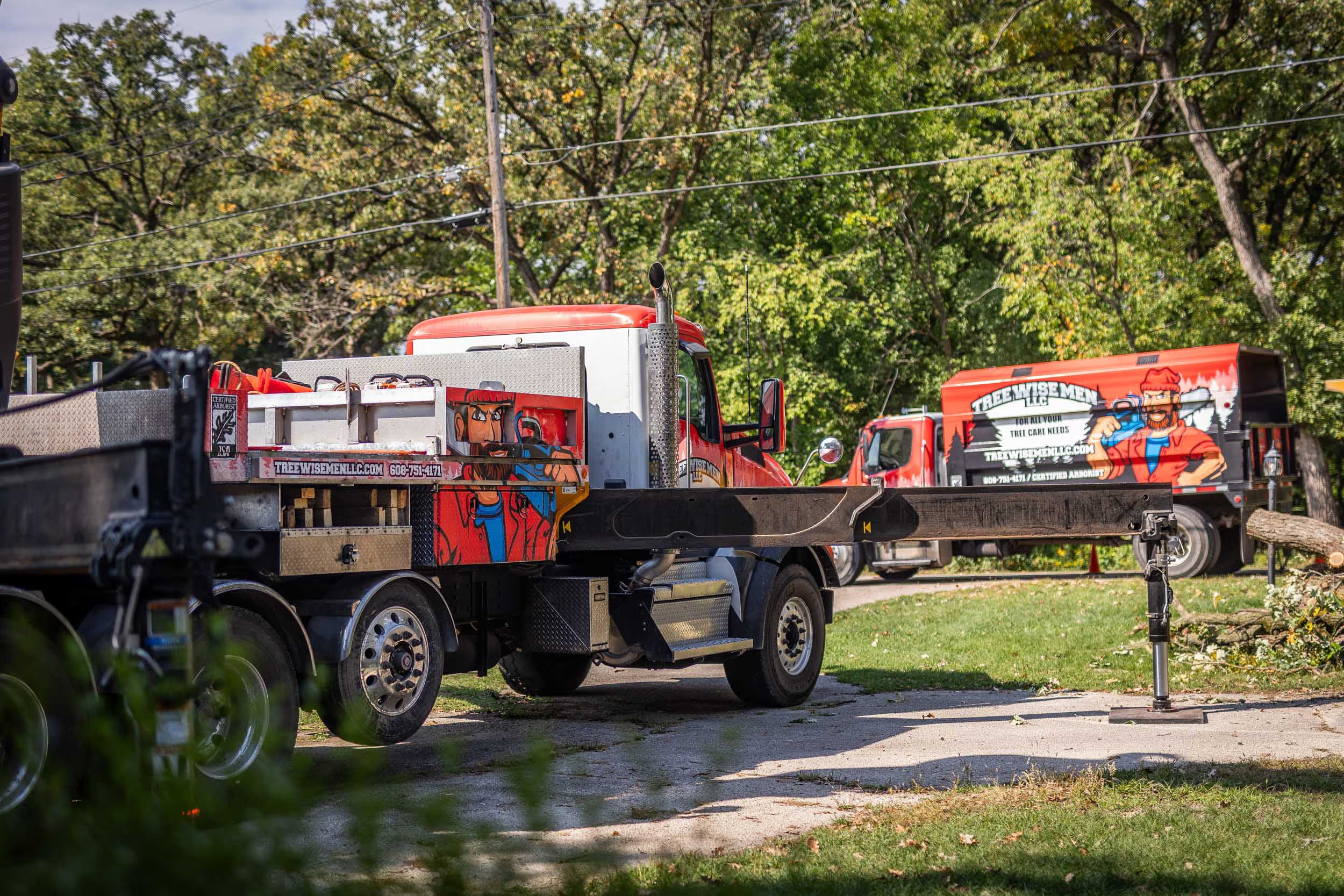
Stump grinding in Madison
Compact-equipment grinding for tight isthmus lots. The stump page has the rest.
Learn more
24/7 emergency tree service in Madison
Storm and fallen-tree response from Landmark Pl. The emergency page has the protocol.
Learn moreTree Removal Cost Guide
2026 Madison and Dane County ranges by size, access, terrace permits, and stump grinding.
Learn more
ISA Certified Arborist in Madison
Diagnosis, TRAQ risk, and written care plans at Landmark Pl. See the arborist page.
Learn moreFinancing
Spread larger removals and multi-tree disease work across monthly payments.
Learn morePlant Health Care
Oak wilt and EAB injections, soil care, and ISA diagnosis — not a spray-and-go program.
Learn more
Commercial Services
HOA, campus, and property-manager contracts dispatched from the Madison office.
Learn moreTree Care in Madison, Dane County
Madison is the largest city in our service area and has an urban forest that's both celebrated and under pressure. The isthmus neighborhoods between lakes Mendota and Monona — Tenney-Lapham, Marquette, Williamson-Marquette — have some of the densest mature street trees in the state, and also some of the most constrained work sites: tight lots, minimal drop zones, and heavy parking conflicts that make rigging the only option.
Dane County was one of the first Wisconsin counties to see emerald ash borer at landscape scale, and the ripple effects are still playing out. We've removed hundreds of dead and dying ash on Madison's near-west side and in the Schenk-Atwood-Starkweather corridor. Newer suburban developments out by Epic and the west-side medical corridor tend to have younger, healthier trees that benefit most from early structural pruning before problems develop.
What We Do in Madison
Isthmus work is almost always rigging-heavy; we see a lot of EAB-driven ash removal west and south; UW-area rentals often want absentee-friendly scheduling. We're a family-owned, ISA Certified Arborist team based in Janesville — Jason James (WI-1418A) and Andrew — and every estimate in Madison is walked by a certified arborist, not a commission salesperson. Every job carries $2M liability insurance and workers comp.
Common services we deliver in Madison:
- Tree removal — scheduled or emergency, small ornamentals through heritage oaks
- Tree trimming & structural pruning — ANSI A300 compliant, not topping
- Stump grinding — ground to 6 inches below grade
- 24/7 emergency response — see our emergency guide for what to do first
- ISA Certified Arborist consultation — diagnosis, risk assessment, preservation planning
What tree care looks like in Madison, beyond the basics.
Madison's tree work splits sharply by neighborhood. The isthmus packs century-old canopy onto 35-foot-wide lots between Lakes Mendota and Monona, where wind funneling produces failure rates higher than surrounding Dane County. The west side and the village neighborhoods of Maple Bluff and Shorewood Hills hold estate-grade specimens — heritage oaks and beeches worth tens of thousands of dollars individually, the kind of trees that need TRAQ-level risk management, not chainsaw work. We dispatch from our Madison office at 2909 Landmark Pl, so most jobs see same-week scheduling.
Madison is genuinely three cities at once when you're managing trees. The isthmus and near-east neighborhoods — Tenney-Lapham, Marquette, Schenk-Atwood, Williamson — are where the housing stock is oldest, the lots are tightest, and the canopy is most exposed to the wind corridor that runs between the lakes. Properties along Lake Mendota's south shore and the Williamson Street corridor see consistent storm clusters: silver maples and willows fail first, mature oaks tolerate the wind better but lose limbs.
The west side tells a different story. University Heights, Vilas, Westmorland, and Nakoma have deeper lots, more setback from the wind, and tree work that's mostly about preservation rather than replacement — the oaks and beeches in those neighborhoods are 80 to 120 years old and worth keeping alive. The villages of Maple Bluff and Shorewood Hills push that even further: their tree boards and forestry programs reflect properties where a single specimen tree can be a five-figure asset.
Across all of Madison, the disease pressure is constant. Oak wilt has been confirmed throughout Dane County for over a decade, with active infection centers we work around every season — the April-through-October pruning ban for oaks is non-negotiable on Madison properties. Emerald ash borer arrived in Dane County in the early 2010s and is now the default assumption: every untreated ash on a Madison property is on a clock. Two-lined chestnut borer takes the oaks that are already stressed by drought or construction. Bur oak blight is increasingly visible in the wooded west side.
The permit and jurisdiction layer complicates everything. The City of Madison Forestry Division manages terrace trees (the strip between sidewalk and street) for most of the city — work on those trees needs a permit through Forestry. Maple Bluff and Shorewood Hills are independent villages with their own tree ordinances and their own foresters. Historic districts (University Heights and the Mansion Hill area, among others) have additional preservation considerations. Our crews handle permit research and jurisdiction coordination on every Madison-area job — it's part of what same-week scheduling from a local office actually means.
Tree pressure unique to Madison
Oak wilt pressure is significant across Dane County, particularly in oak-heavy neighborhoods like the UW campus area, University Heights, and Maple Bluff. The isthmus wind corridor between the lakes produces wind speeds that devastate silver maples, willows, and Bradford pears in storm clusters. Emerald ash borer has been confirmed throughout Dane County since the early 2010s — every untreated ash is on borrowed time. Two-lined chestnut borer hits oaks already stressed by drought or construction damage.
Utility coordination
MGE (Madison Gas and Electric) for most of Dane County; we coordinate trim-back schedules and utility-line work directly with their forestry team.
Permits and Madison forestry coordination
City of Madison Forestry Division has jurisdiction over terrace trees (the strip between sidewalk and street) — work on public trees requires a permit issued through the City. The independent villages of Maple Bluff and Shorewood Hills each have their own tree boards and ordinances on top of City rules. Properties in University Heights and other historic districts may face preservation review for tree work that affects the historic context. Pruning trees on purely private property within Madison generally doesn't require a permit.
Neighborhoods and areas we serve in Madison
Isthmus (Tenney-Lapham, Marquette, Schenk-Atwood)
Tight lots, century-old canopy, isthmus wind corridor
University Heights
Historic district, heritage elms and oaks 100+ years old
Vilas & Dudgeon-Monroe
Mature canopy adjacent to UW Arboretum and Vilas Park
Maple Bluff
Independent village on Lake Mendota, estate properties, village forester
Shorewood Hills
Independent village west of UW, tree ordinance, estate canopy
Nakoma & Westmorland
Dense oak and maple canopy on west-side residential lots
Near East & Atwood
Storm-vulnerable silver maples and willows along the lakes
Monona
Southeast shore of Lake Monona, almost surrounded by Madison
Middleton
Pheasant Branch oaks and Lake Mendota northwest shore — same Madison office
Verona
Epic corridor and older Main Street canopy, 15 minutes south
Sun Prairie
Downtown heritage trees plus east-side subdivision ash
Waunakee
Village-core maples and north-side growth, 15 minutes north
Recent Projects from Our Crews
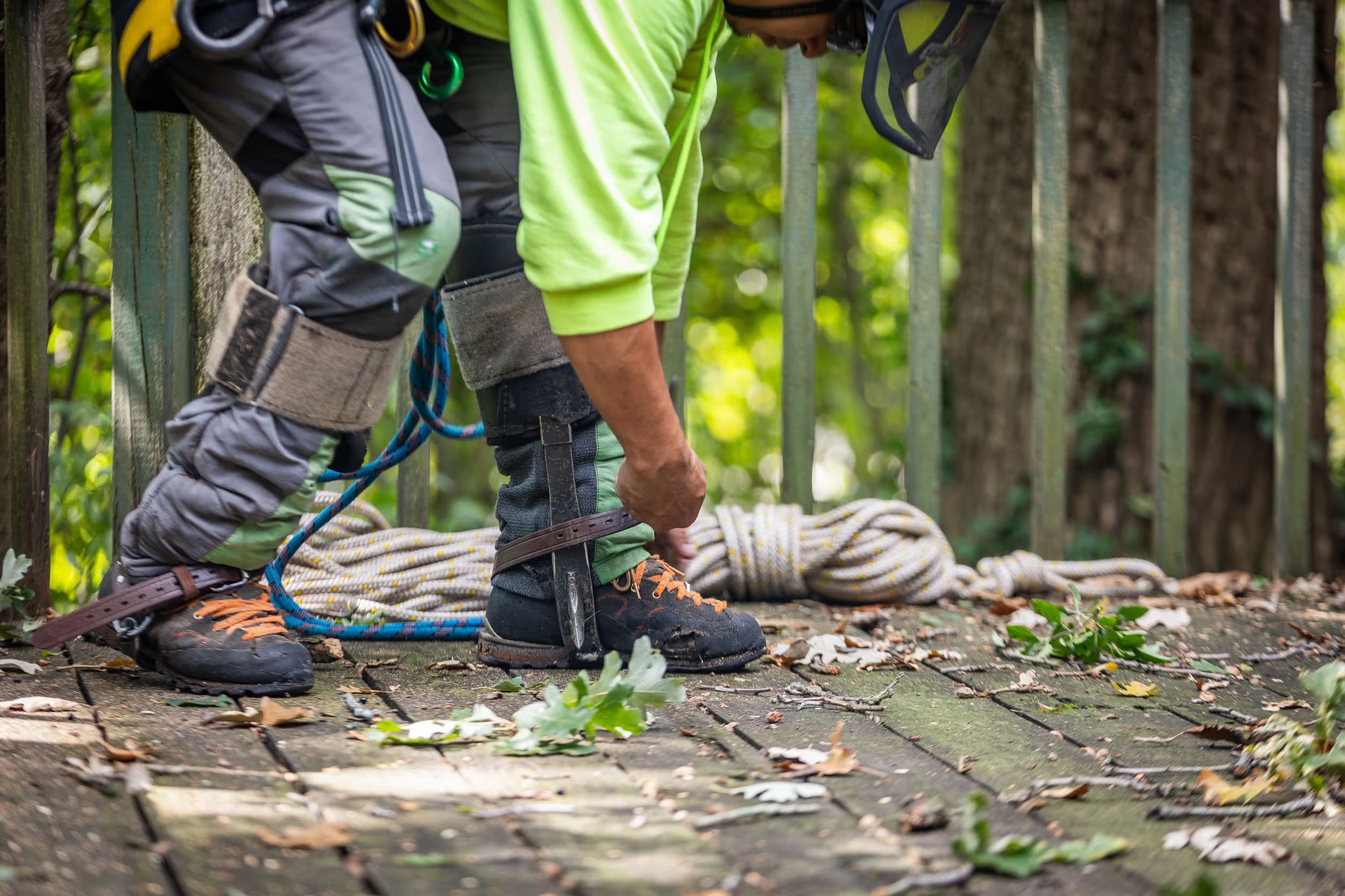
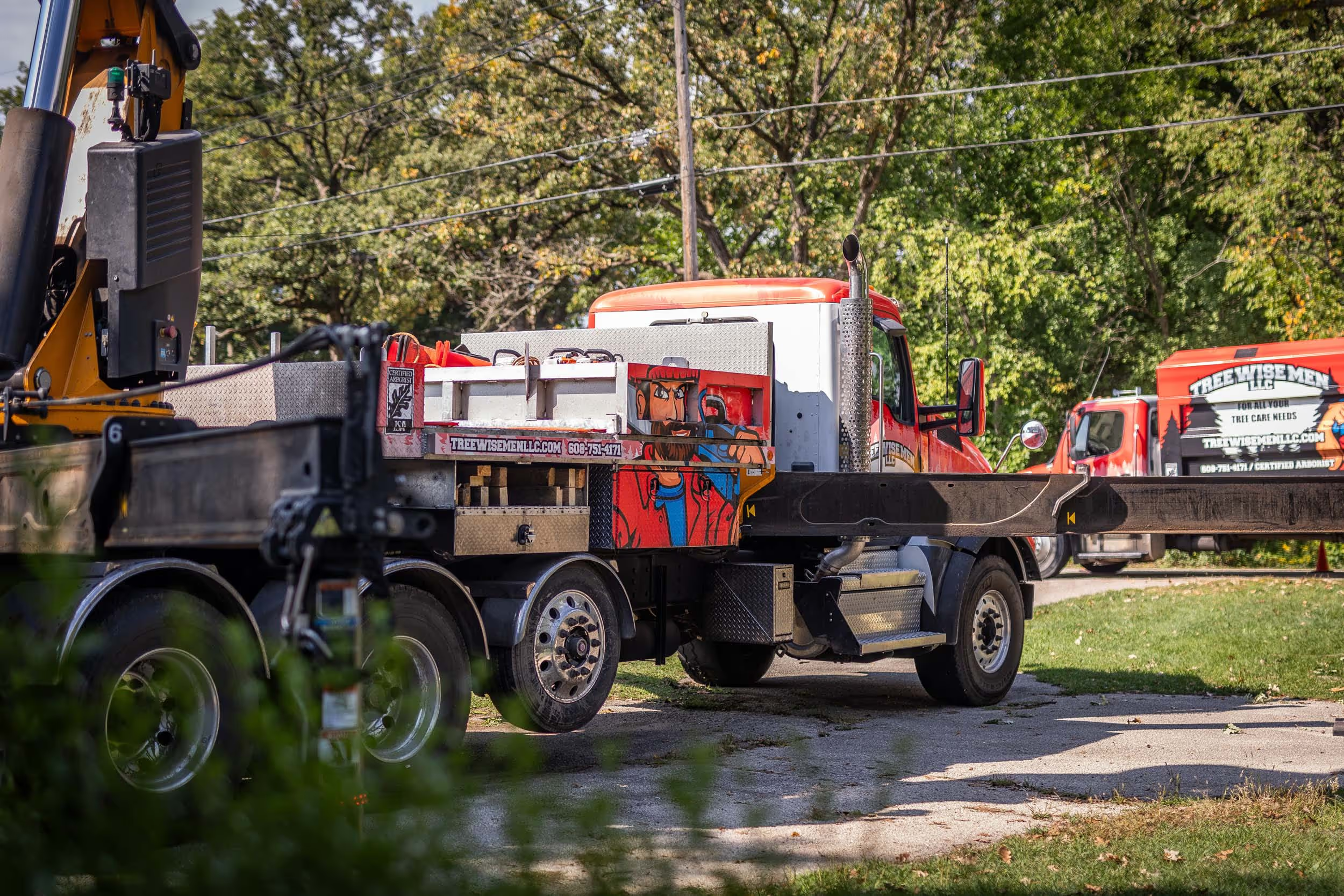
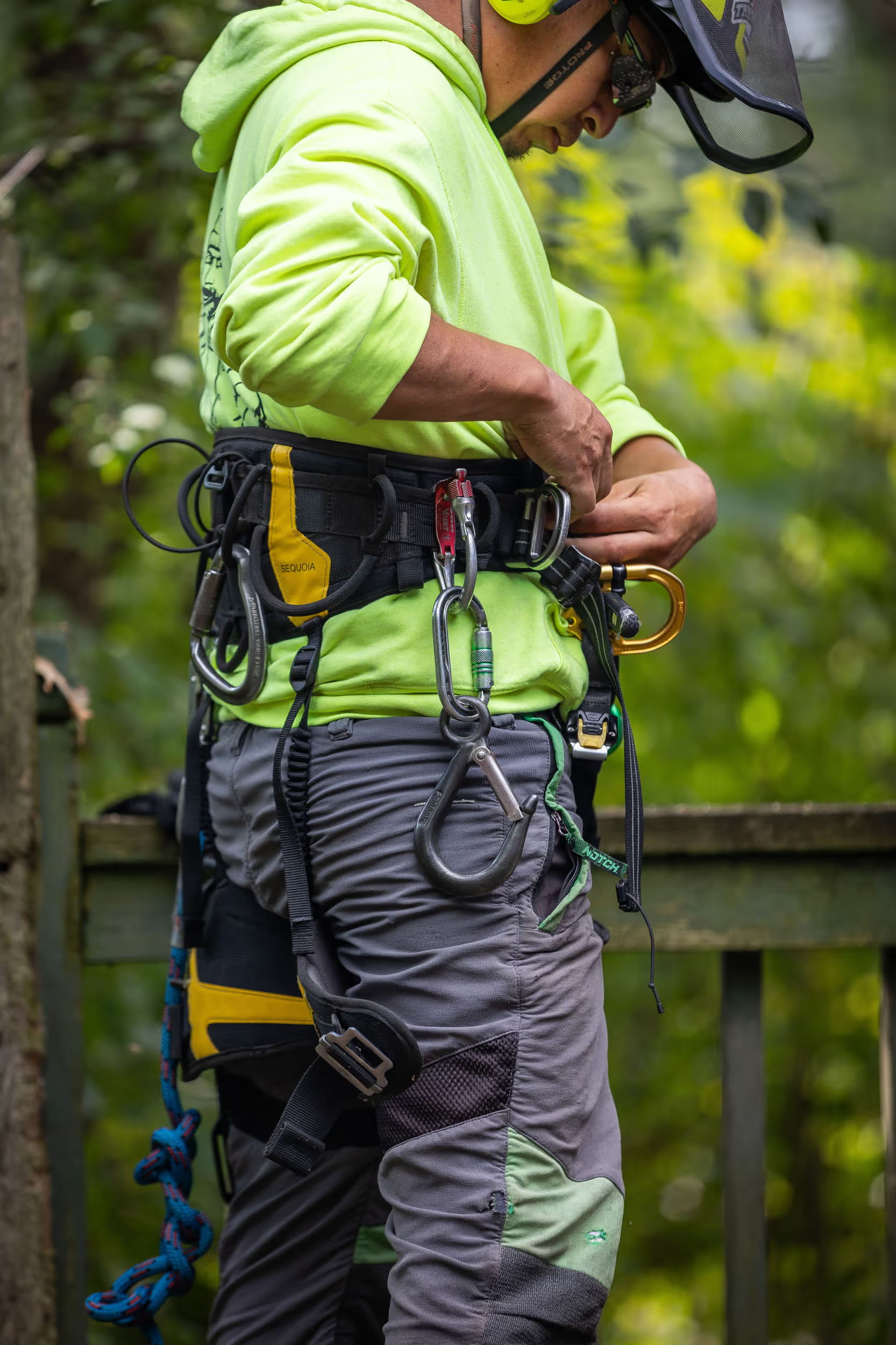
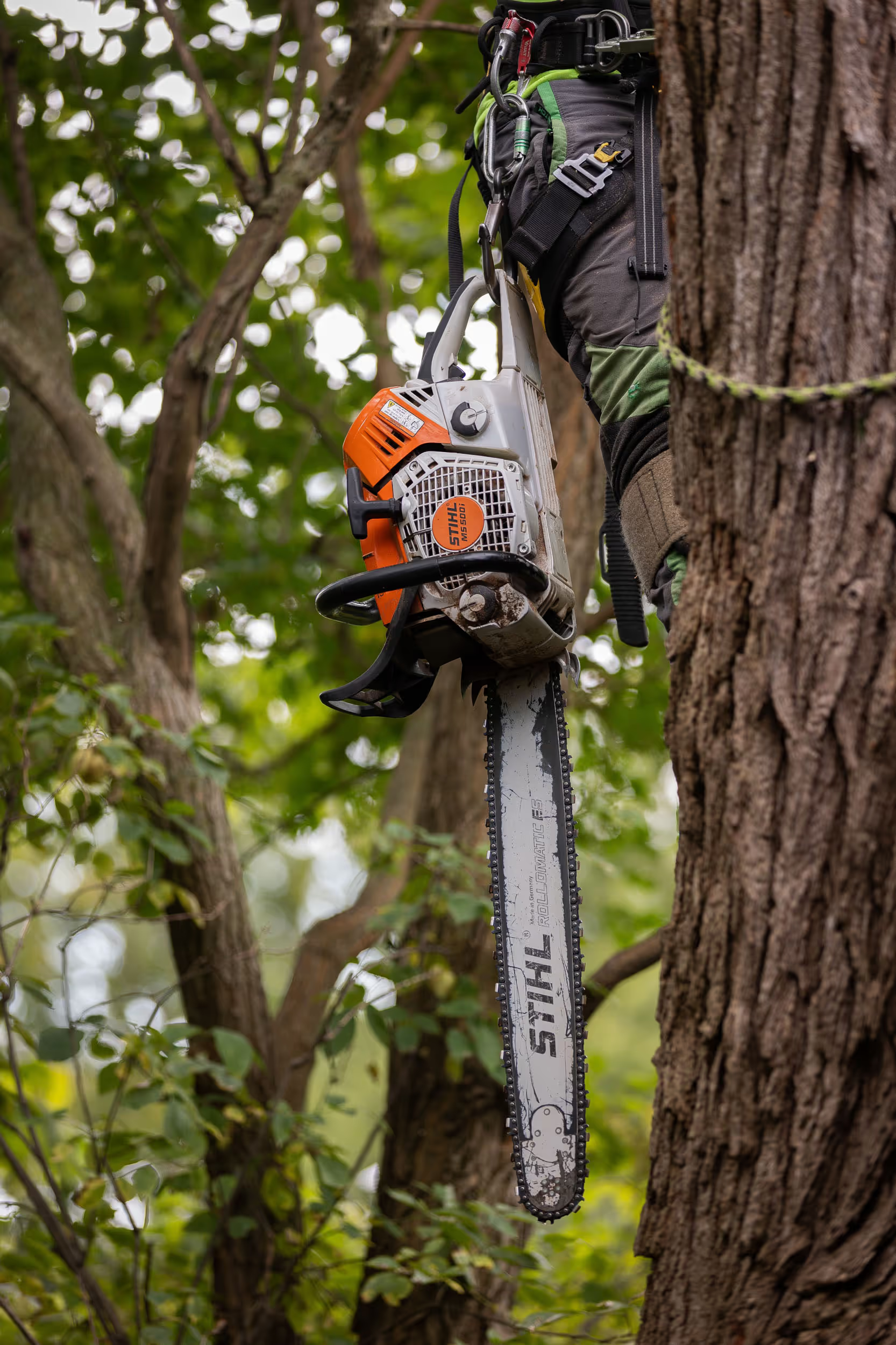
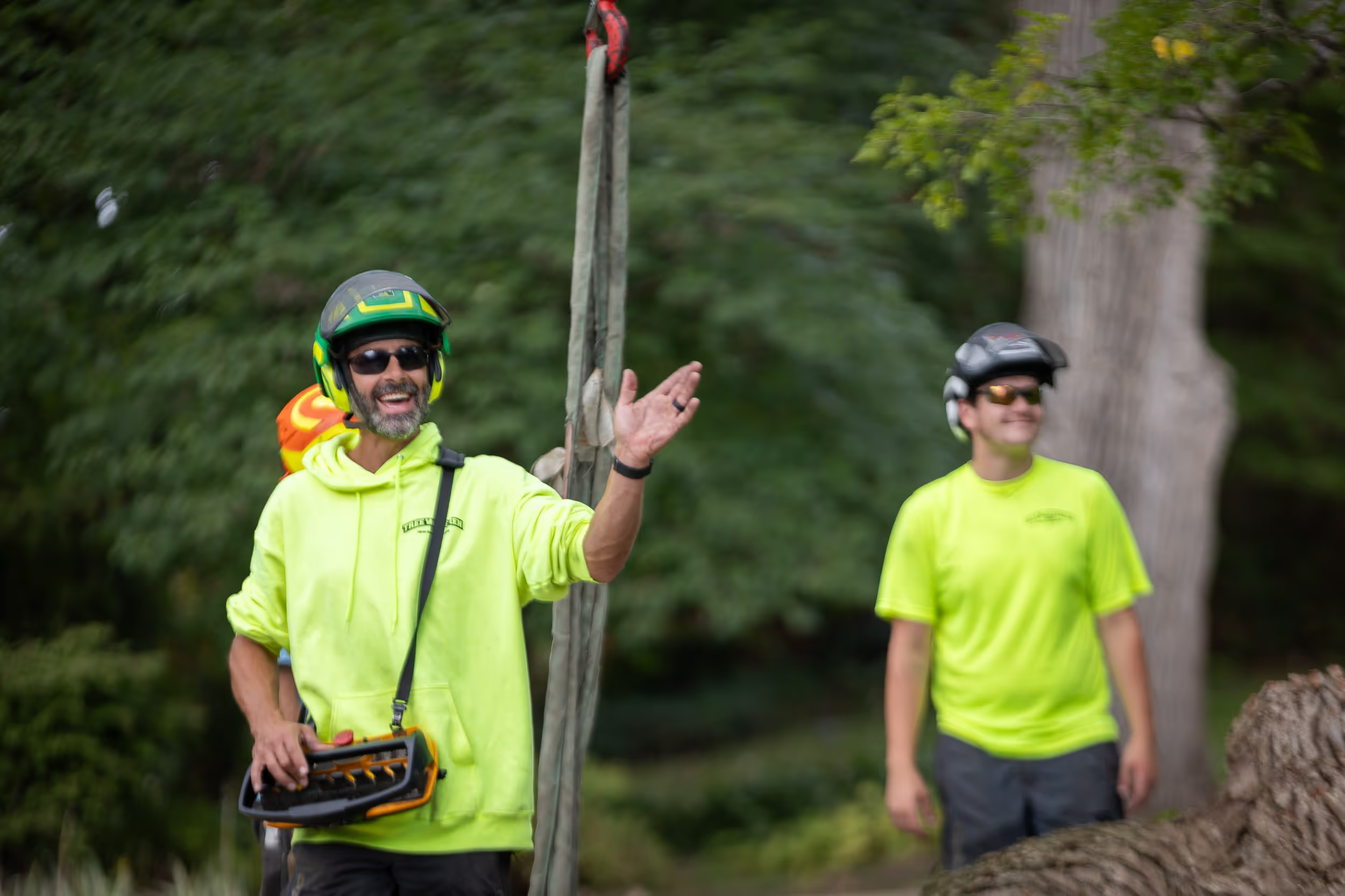
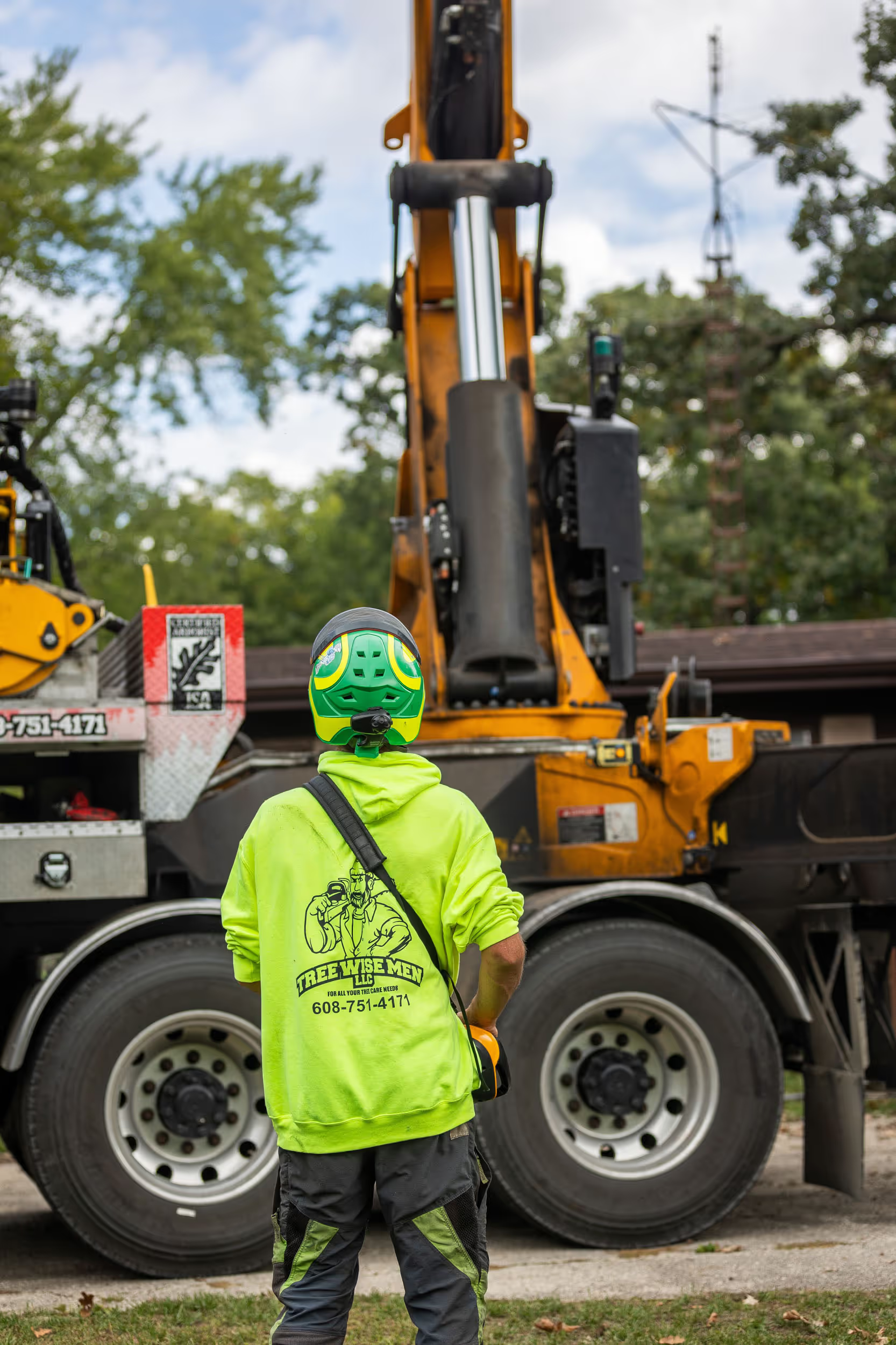
A look at recent tree work across Southern Wisconsin. Every job is walked by an ISA Certified Arborist before we start.
What Madison-area Homeowners Say About Us
4.9 stars across 993 Google reviews of our Janesville, Madison, and Fort Atkinson crews — pulled live from Google, not hand-picked.

Fast same day service for an emergency removal of large tree limb that landed against a neighbors home. Also, a very fair price.
David Figi
in the last week · Madison listing
A 100+’ tree fell on my car. The team was at my house and had the tree cleared professionally, and efficiently/effectively within a few hours. They took care of EVERYTHING. No mess left behind. They billed it in a way that the insurance company did not question a single thing about it. Even neighbors commended the work and how quickly the tree was take care of. HIGHLY recommend!
Nicolas Retana
in the last week · Madison listing
Took down a huge tree great to watch the easy way the men made it work great professional job and the neat and orderly way everything came down
Peggy Pridmore
in the last week · Janesville HQ listing
Dedicated Service Pages for This City
We've built deeper, service-specific pages for the most common tree work in this area. Each one covers local context — neighborhood patterns, permit notes, species risks, and proven approaches.
Guides and services for Madison homeowners
Dispatched from our Madison office on Landmark Pl. These pages cover emergency response, pricing, oak wilt, emerald ash borer, and stump work without sending you back to a generic hub.
Tree service in Madison — common questions.
How fast can you respond to emergencies in Madison?
We offer 24/7 emergency response for Madison and all of Southern Wisconsin. Our crews are typically on-site within a few hours for urgent storm damage, fallen trees, or hazardous situations near structures. Call (608) 716-4167 for the Madison office, or (608) 751-4171 any time for 24/7 HQ dispatch — a real person, or our AI phone assistant, will route you immediately.
Are your arborists ISA Certified?
Yes. Every estimate in Madison is walked by an ISA Certified Arborist — Jason James (WI-1418A) or Andrew — not a commission salesperson. We're also TCIA Accredited and carry $2 million in liability insurance plus full workers compensation on every crew.
Do you offer free estimates in Madison?
Yes — estimates are always free. You can request one by phone at (608) 716-4167, through our online contact form, or via our AI phone assistant, which will text you a self-scheduling link within minutes so you can pick a time that works for you.
Do I need a permit to remove a tree in Madison?
For trees on private property, most Madison-area jurisdictions don't require permits for tree removal. Trees in the public right-of-way (the strip between sidewalk and street, or boulevard trees) are typically managed by the local public works or forestry department and require coordination before any work. Properties in historic districts, HOA-governed neighborhoods, or specific platted subdivisions may have additional restrictions. We handle all permit research and city coordination as part of our service.
Do you work on both residential and commercial properties in Madison?
Yes. We handle single-tree removals, full property clearing, and HOA, municipal, and commercial tree maintenance contracts in Madison. For property managers and HOAs we provide seasonal service agreements that keep trees safe and budgets predictable. (Snow and ice management is a Rock County-only service, dispatched from our Janesville headquarters.)
What's included in your tree removal service?
Our tree removal in Madison includes a walk-through with an ISA Certified Arborist, full removal to ground level, optional stump grinding to 6 inches below grade, brush chipping, and complete property cleanup. We leave your yard spotless.
Do you use climbing spikes or topping cuts?
No. We follow ANSI A300 standards — no spikes on trees we're pruning (only removals), no topping cuts, and no indiscriminate pruning. Our work is designed to keep your trees healthy and structurally sound long-term.
When is the safe window to prune oak trees in Madison?
November through March only. Oak wilt is a fatal fungal disease spread by sap beetles attracted to fresh pruning wounds during warm months. Pruning oaks in Madison between April and October exposes wounds that beetles visit, depositing oak wilt spores that can kill the tree within weeks. We never prune oaks outside the safe dormant window unless it's an emergency hazard, in which case we apply tree wound paint immediately to seal the cut.
Can you treat ash trees for emerald ash borer in Madison?
Yes. For valuable ash trees still healthy enough to save (less than 30% canopy decline), we perform trunk-injection treatment with emamectin benzoate (TREE-äge or Arbor-Mectin) every 2 to 3 years. The optimal injection window is mid-April through June. For ash trees with more than 50% canopy decline, removal is usually the right call — treatment can't reverse advanced damage. We give an honest tree-by-tree assessment for each ash on your property.
Do you help with storm damage insurance claims in Madison?
Yes. We provide detailed photographic documentation, written damage assessments, and itemized invoices that adjusters need to process claims efficiently. We bill many major homeowners insurance carriers directly so you don't have to front the cost. Our documentation has helped Madison homeowners through claims after every major storm event in the past decade — derecho damage, ice storms, summer thunderstorms, and heavy wet snow events.
Need tree work in Madison?
Fast response, free estimates, and work done right the first time — by a crew that's been serving Southern Wisconsin since 2010. Call (608) 716-4167 for the Madison office, or (608) 751-4171 for 24/7 HQ dispatch.