Spring Tree Inspection Checklist: What Southern Wisconsin Homeowners Should Look For
Spring is finally arriving in Southern Wisconsin, and after months of freezing temperatures, heavy snow loads, and ice storms, your trees deserve a thorough checkup. Just like you schedule a physical exam for yourself each year, your trees benefit from a seasonal inspection that can catch small problems before they turn into expensive emergencies.
At Tree Wise Men LLC, we perform professional tree assessments throughout the Janesville area every spring. But there is plenty that homeowners can do on their own to stay ahead of trouble. Walk your property with this checklist in hand, and you will have a clear picture of what needs attention this season.
Look for Winter Storm Damage
Southern Wisconsin winters are tough on trees. Start your inspection by looking up into the canopy for broken or hanging branches. These are sometimes called widow makers for good reason—a limb that is cracked but still attached to the tree can fall without warning on a calm day, endangering anyone below.
Check for branches that are split at the crotch, bark that has been stripped away by ice, or limbs that are dangling at odd angles. Even smaller broken branches caught in the upper canopy should be noted because they will eventually come down. If you spot hanging or broken limbs that are out of reach, this is a job best left to a professional with the right equipment and training.
Walk the full perimeter of each tree and look at the trunk as well. Vertical cracks in the bark can indicate frost cracking, which happens when daytime warming and nighttime freezing cause the wood to expand and contract. While many frost cracks heal on their own, deep or recurring splits can create entry points for disease and insects.
Inspect the Root Zone and Soil
The base of the tree tells you a lot about its overall health. Look for mushrooms or fungal conks growing at the base of the trunk or on surface roots. These fruiting bodies are a sign that decay fungi are at work inside the tree, breaking down the wood that gives it structural strength. A tree with significant root or trunk decay can fail suddenly, even if the canopy still looks green and full.
Check whether the soil around the root flare has heaved or shifted during the freeze-thaw cycles of late winter. If the tree appears to be leaning more than it did last year, or if you can see roots pulling out of the ground on one side, the tree may have a compromised root system. This is especially common in younger trees and those planted in poorly drained clay soils, which are widespread across Rock County.
Also take note of any areas where lawn equipment, vehicles, or foot traffic may have compacted the soil over the root zone. Compacted soil starves roots of oxygen and water, leading to slow decline over several years. Mulching out to the drip line with two to four inches of wood chips—kept away from direct contact with the trunk—is one of the best things you can do for a tree in spring.
Examine Bark and Trunk for Signs of Disease
Spring is the right time to look for early indicators of common tree diseases in our region. Oak wilt, Dutch elm disease, and apple scab are all present in Southern Wisconsin, and catching symptoms early makes a significant difference in treatment outcomes.
Look for cankers—sunken, discolored, or cracked areas of bark on the trunk or major limbs. Cankers are caused by fungal infections and can girdle a branch or trunk if they expand far enough. Also watch for oozing sap, which can indicate bacterial wetwood or a borer infestation.
On oak trees specifically, do not prune between April and July. Open wounds during this period attract the sap beetles that spread the oak wilt fungus. If your oaks need pruning, early spring before April or the dormant season in fall and winter are the safest windows. Tree Wise Men LLC can help you time pruning correctly so your oaks stay protected.
Check for Insect Activity
As temperatures climb into the 50s and 60s, overwintering insects become active again. Walk up close to your trees and look for small round exit holes in the bark, fine sawdust-like frass at the base of the trunk, and trails or galleries just beneath the bark surface. These are all signs of wood-boring insects such as the emerald ash borer, two-lined chestnut borer, or bronze birch borer.
Emerald ash borer has been confirmed throughout Rock County, and any untreated ash tree is at serious risk. If you have ash trees on your property and have not yet decided on a management plan, this spring is the time to act. Treatment options exist but must be applied before the tree has lost too much canopy. Tree Wise Men LLC offers ash tree assessments and can advise you on whether treatment or removal is the better path forward.
Also look for egg masses from spongy moth on tree trunks, fences, and outdoor furniture. These tan, fuzzy patches each contain hundreds of eggs that will hatch in late April or May. Scraping them off and dropping them into soapy water now can prevent significant defoliation later in the season.
Evaluate Overall Canopy Health
Once buds begin to break and leaves start to emerge in April, pay attention to how evenly the canopy fills in. A tree that leafs out on one side but remains bare on another may have a vascular disease, root damage on one side, or internal decay in specific limbs.
Dead branches are easiest to identify in late spring when the rest of the tree is fully leafed out. Mark any branches that fail to produce leaves so you can have them removed. Dead wood removal is not just cosmetic—it eliminates habitat for disease and insects, reduces the risk of falling branches, and improves air circulation through the canopy.
If you notice leaves that are significantly smaller than normal, yellowing prematurely, or wilting without an obvious cause like drought, the tree may be under stress from root problems, soil issues, or disease. These symptoms are worth investigating sooner rather than later.
Review the Clearance Around Your Home
Spring is also a practical time to check whether any branches are growing too close to your house, garage, power lines, or other structures. Branches that rub against roofing or siding cause gradual damage, and limbs overhanging the roof drop leaves and debris into gutters, creating moisture problems.
As a general guideline, maintain at least ten feet of clearance between tree branches and your roof. Branches near power lines should only be handled by professionals—never attempt to prune near electrical lines yourself. Tree Wise Men LLC works regularly with utility clearance and can safely address branches that threaten structures or power lines.
When to Call a Professional
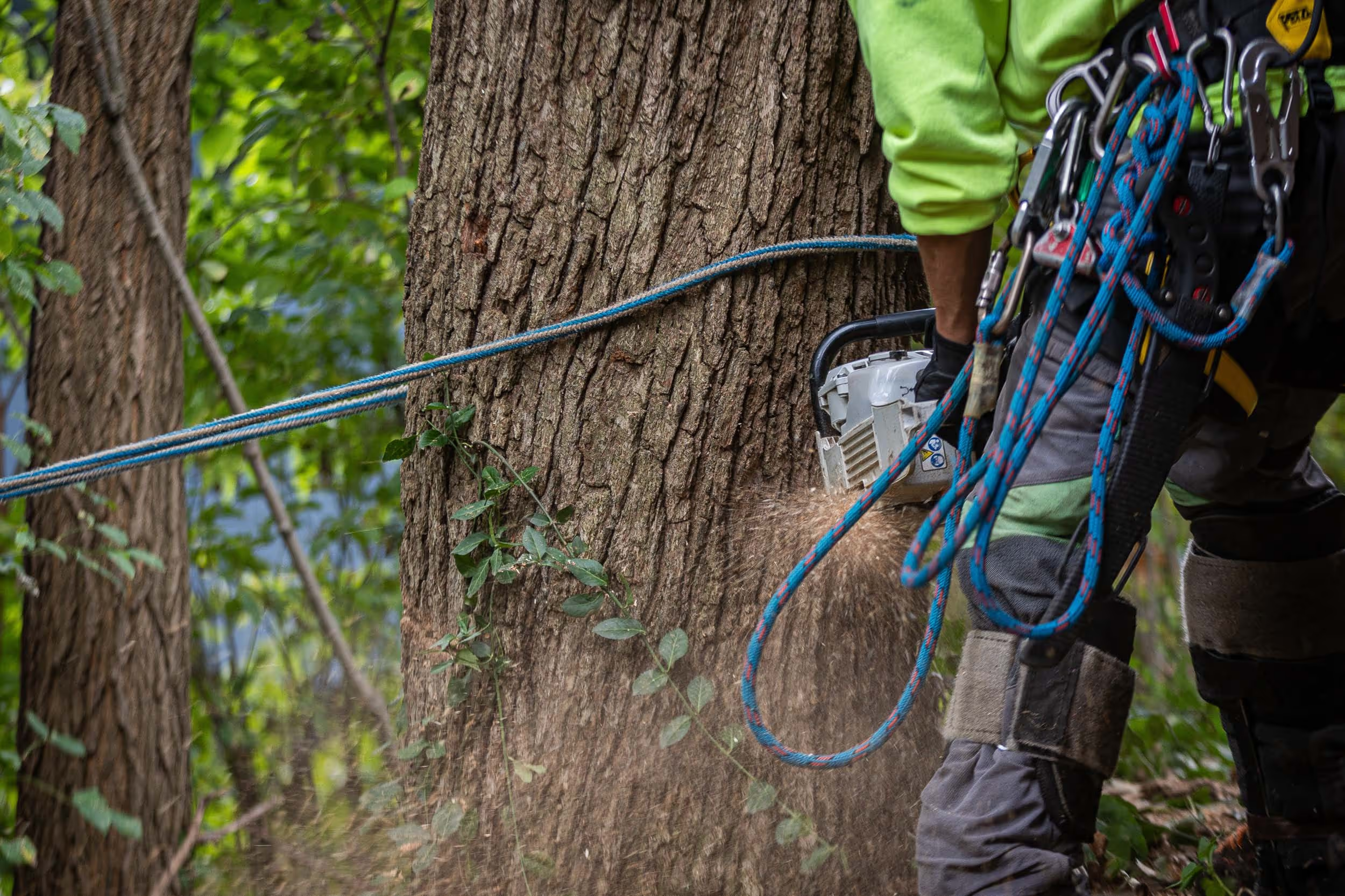
Your spring walkthrough may reveal issues that are straightforward, like a small broken branch you can prune from the ground. But many problems require an experienced arborist to evaluate properly. Leaning trees, large hanging limbs, signs of internal decay, and suspected disease all warrant a professional assessment.
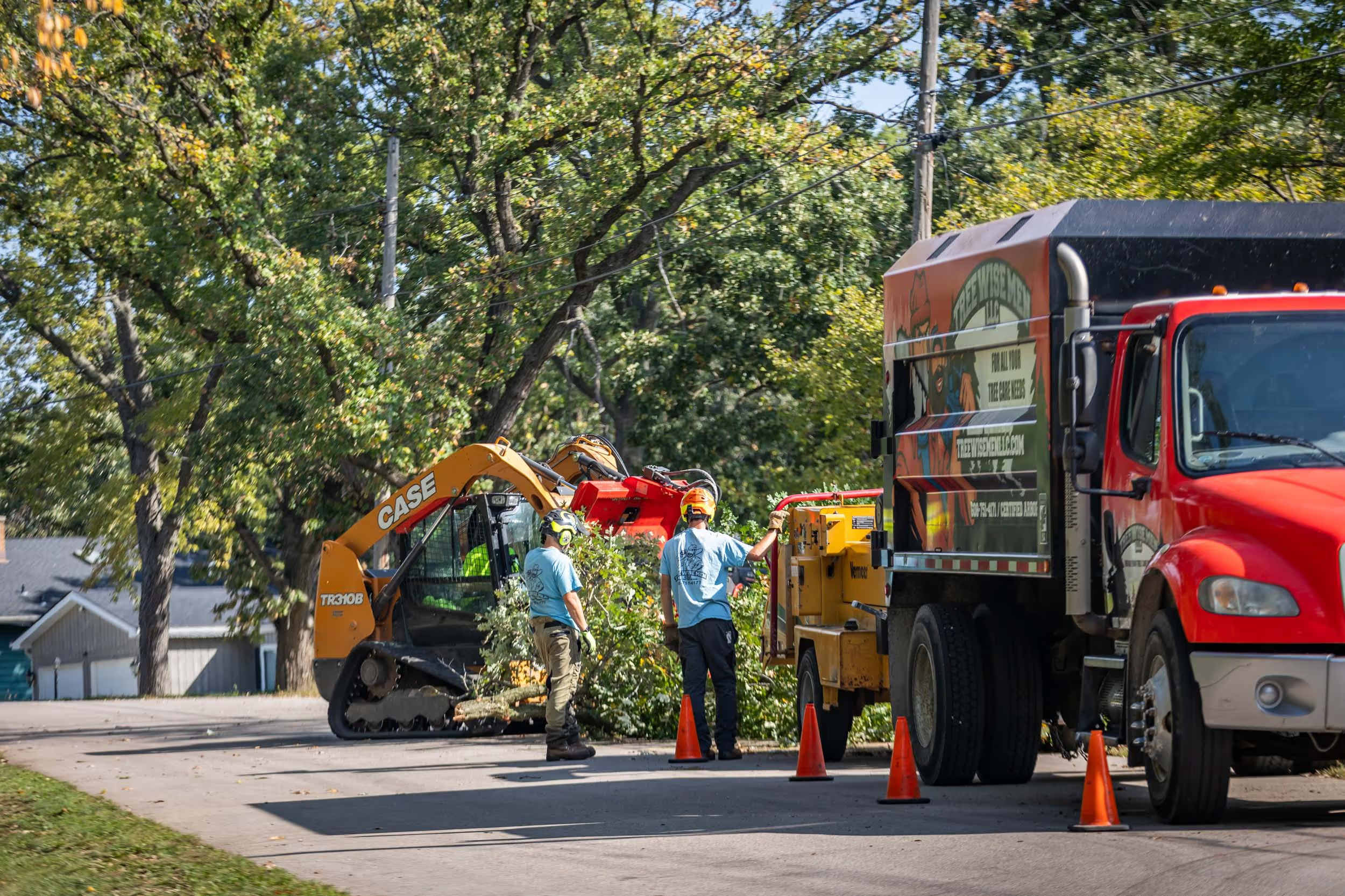
Tree Wise Men LLC serves homeowners throughout Janesville, Beloit, Milton, Edgerton, and the surrounding communities of Rock County. Our team can perform a thorough spring inspection, recommend the right course of action, and handle everything from pruning and cabling to complete tree removal when necessary.
Do not wait for a spring storm to turn a questionable tree into an emergency. Give us a call at (608) 751-4171 to schedule your spring tree inspection. Catching problems early protects your property, keeps your family safe, and gives your trees the best chance at a long, healthy life.