
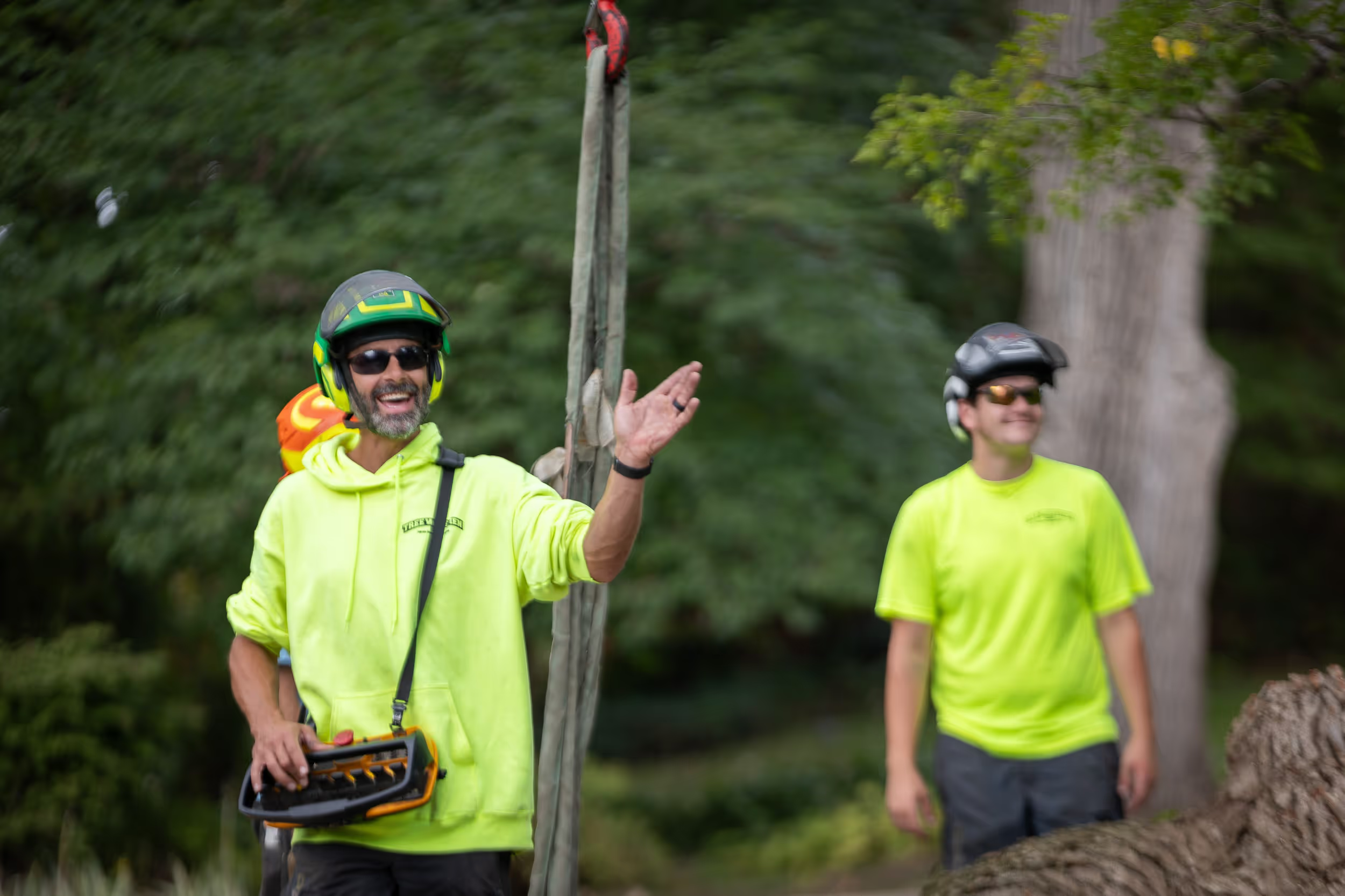
Deadwood Removal — Eliminate Falling Branch Hazards
Dead branches in your trees are ticking time bombs. They can fall in any weather, at any time, damaging cars, roofs, fences, and injuring people. Our arborists climb into the canopy and systematically remove all dead and dying wood.
What Causes Dead Branches in Trees?
Understanding why branches die helps identify which trees need the most attention. Several factors common in Southern Wisconsin contribute to deadwood accumulation.
Natural Self-Pruning
As trees grow taller, lower branches become shaded and die naturally. This is normal but the dead wood still needs removal to prevent falling hazards.
Storm Damage
Wind, ice, and heavy snow break branches that remain hanging in the canopy. These partially attached branches (hangers) are especially dangerous and unpredictable.
Disease & Fungal Infection
Diseases like oak wilt, Dutch elm disease, and various canker fungi kill individual branches or entire limb sections. Dead wood harbors the infection and should be removed.
Insect Damage
Emerald ash borer, two-lined chestnut borer, and bark beetles kill branches by disrupting nutrient and water flow. Infested deadwood accelerates decline.
Drought Stress
Prolonged dry periods cause trees to shed branches they cannot support. Wisconsin's occasional summer droughts trigger deadwood in species with shallow root systems.
Root Zone Disturbance
Construction, soil compaction, or grade changes damage roots, causing progressive dieback in the canopy above the affected root zone.
Our Deadwood Removal Process
Ground-Level Assessment
Our arborist surveys the tree from below, identifying visible deadwood, noting the tree's overall health, and planning the climbing and rigging approach.
Canopy Inspection Aloft
Once in the tree, our climber conducts a thorough inspection that reveals deadwood hidden from ground view — often 50% or more of total dead branches are only visible from inside the canopy.
Systematic Removal
Starting from the top and working down, we cut dead branches at the branch collar using proper technique. Larger pieces are lowered on ropes to protect the ground below.
Cleanup & Health Report
All debris is chipped and removed. We provide a report on the tree's overall health, noting any disease symptoms, pest activity, or structural concerns found during the work.
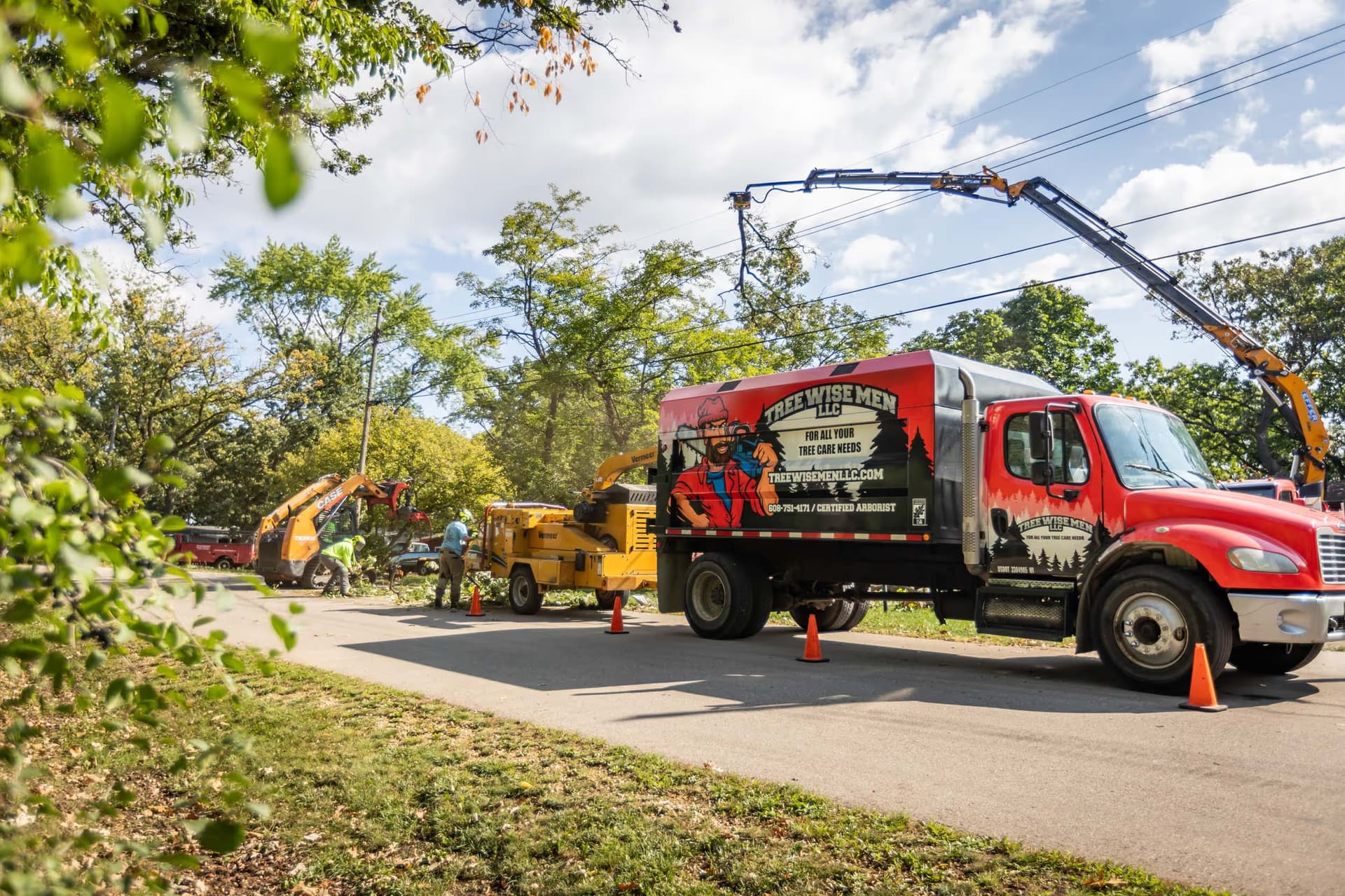
Deadwood Removal FAQs
Questions about dead branch removal.
Why is deadwood removal important?
Dead branches fall without warning, posing serious risk to people, vehicles, and property below. Removing deadwood eliminates this hazard and also improves the tree's appearance. Dead branches can also harbor insects and fungi that may spread to healthy wood.
How often should deadwood be removed?
We recommend a deadwood inspection every 2-3 years for large shade trees, especially oaks, maples, and ashes. Trees adjacent to homes, driveways, sidewalks, and play areas should be checked annually due to the higher target risk.
Can deadwood removal be done any time of year?
Yes, dead branch removal is one of the few pruning tasks that is safe year-round since removing dead wood does not trigger new growth or expose the tree to disease. We can schedule deadwood removal whenever it fits your timeline.
What size branches do you remove?
We remove dead branches 2 inches in diameter and larger as standard practice. Smaller deadwood may be included based on the tree's location — for example, over a patio or playground, we remove all dead wood regardless of size.



Do Not Wait for Dead Branches to Fall
Schedule deadwood removal before the next storm. Our ISA Certified Arborists will make your trees safer and more beautiful.